PCB Trace Width and Current Calculation: A Practical Guide
When designing a PCB, one of the most common questions is: How wide should a PCB trace be for a given current? For example: Can a 0.25 mm trace carry 1 A? Is a 0.5 mm trace enough for 2 A? How wide should a 5 A power trace be? Does 2 oz copper allow […]
PCB Ground Plane: Why It Matters for Signal Integrity and Power Stability
When designing a PCB, engineers often spend a lot of time thinking about signal traces and power traces. However, there is another path that is equally important: The return current path. A signal does not simply travel from one component to another and disappear. Current must complete a loop. For many PCB designs, a properly […]
How to Design a PCB Power Supply Section
A reliable PCB starts with a reliable power supply. Many electronic circuits may appear to work correctly during normal operation but become unstable when the power supply is poorly designed. Problems such as: MCU resets communication errors unstable digital signals unexpected shutdowns Flash programming failures excessive noise component overheating can all be related to power […]
My First PCB Project with Autodesk Fusion: From Schematic to Manufacturing
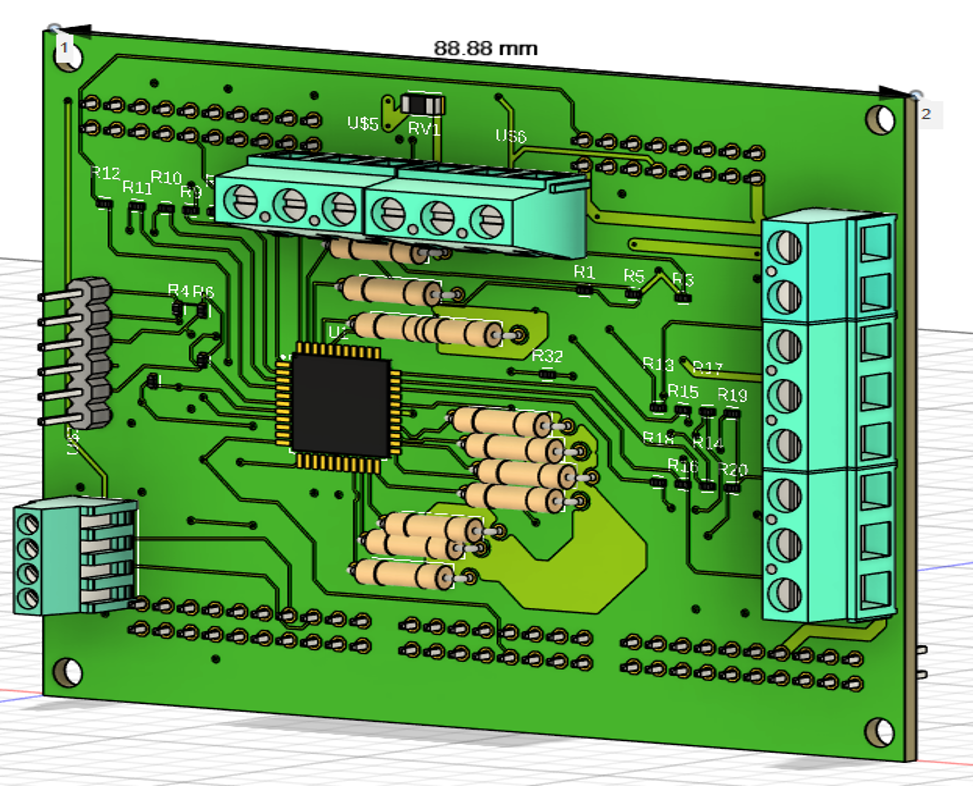
Designing a PCB is much more than drawing copper traces. A complete PCB development process normally includes: Requirements → Schematic → Components → PCB Layout → DRC → 3D Verification → Manufacturing Data → Prototype → Testing Autodesk Fusion Electronics connects the schematic, 2D PCB, and 3D PCB within its electronics design workflow. This article […]
KiCad vs Autodesk Fusion: Which PCB Design Software Is Right for Your Project?

Choosing the right PCB design software can have a major impact on an electronics development project. For a hobby project, you may want software that is free and relatively easy to learn. For a small engineering company, however, PCB layout is only part of the development process. Mechanical design, enclosure dimensions, component placement, manufacturing, and […]
PCB Design Software for Small Businesses and Personal Projects: KiCad, Autodesk Fusion, and More
Designing a PCB is no longer limited to large engineering companies with expensive EDA software. Today, individual engineers, students, makers, startups, and small engineering companies can design professional PCBs using a variety of tools. The important question is: Which PCB design software is appropriate for a small company or an individual engineering project? There is […]