Essential Electronics Lab Equipment for Development and Testing
How to Build a Practical Electronics R&D Lab on a Budget Developing an electronic product requires more than designing a circuit and writing firmware. Engineers must measure electrical signals, verify power supplies, debug communication interfaces, evaluate PCB performance, and test the product under different operating conditions. For individual engineers, independent developers, startups, and small engineering […]
Best Oscilloscopes for MCU, PWM, SPI, and UART Debugging
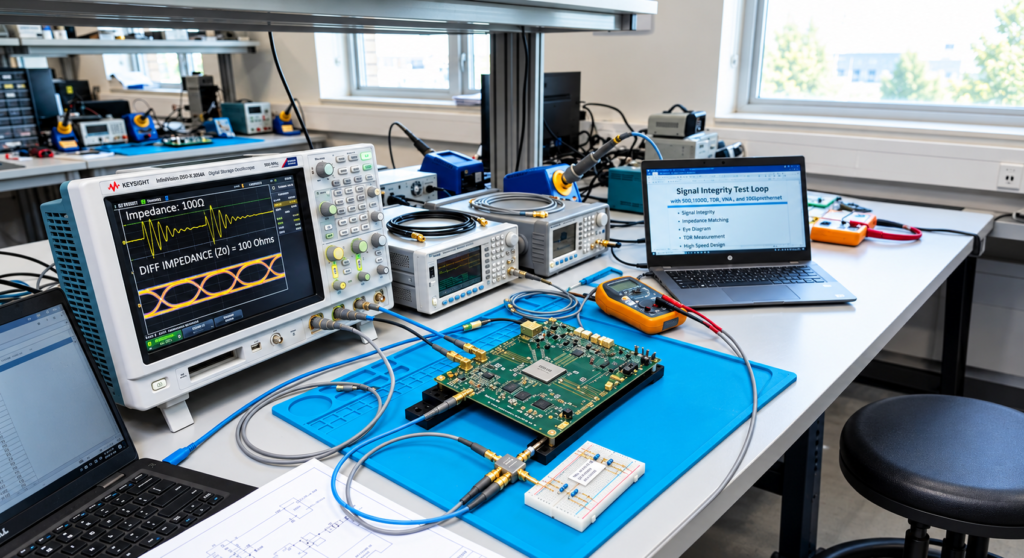
A Practical Guide for Embedded Systems Engineers When developing embedded systems, an oscilloscope is more than a tool for measuring voltage. It helps engineers identify startup failures, unstable reset signals, incorrect PWM timing, serial communication errors, and power-supply noise. For projects involving microcontrollers, LCD interfaces, PC communication, and high-speed control signals, choosing the right oscilloscope […]
Best Oscilloscopes for Electronics Engineers: Personal Use vs. Professional Lab Equipment
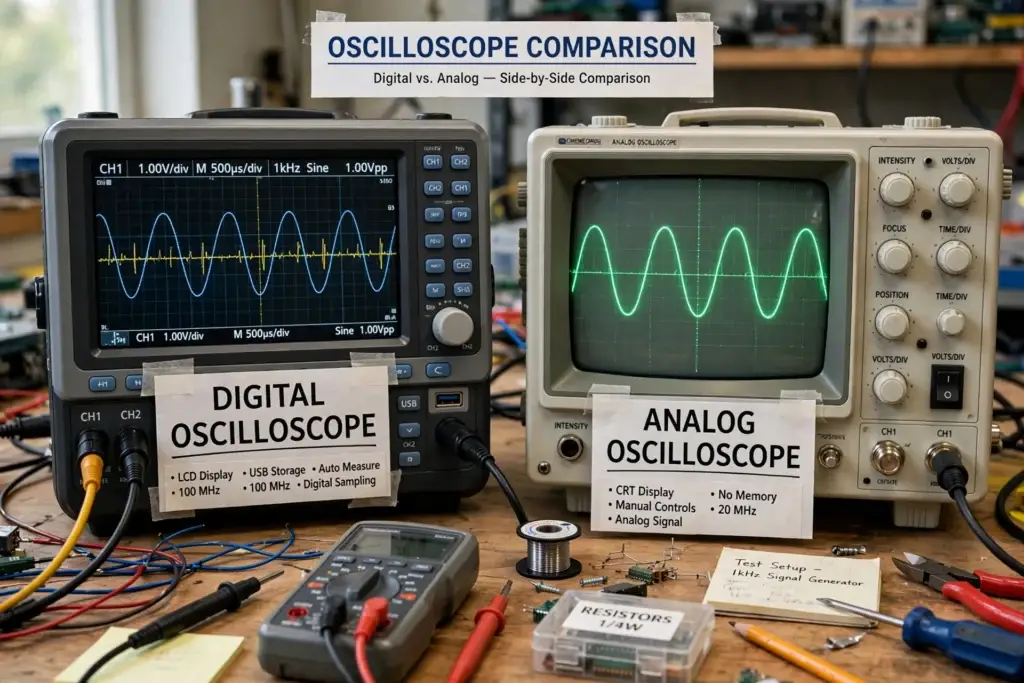
Introduction An oscilloscope is one of the most important instruments for electronics engineers. It allows you to observe electrical signals over time and investigate problems that cannot be diagnosed easily with a digital multimeter alone. Whether you are a hobbyist building electronic circuits, an embedded engineer debugging a microcontroller, or a professional working in an […]
How to Troubleshoot PCB Power Problems: A Step-by-Step Engineering Method
Introduction Many electronic problems appear to be software or communication issues. Examples: MCU does not start Communication errors Random reset Sensor malfunction Flash programming failure Industrial controller stop Vision system error However, in many cases, the root cause is: Power quality problem Before replacing ICs or changing software, engineers should first verify: Input […]
PCB Power Integrity: How to Measure VCC Ripple, Noise, and Voltage Drop
Introduction A PCB may appear to have a stable power supply when measured with a multimeter. For example, you may measure: VCC = 3.30 V But this does not necessarily mean that the power rail is clean. An oscilloscope may reveal: Ripple High-frequency noise Voltage spikes Ringing Startup disturbances Voltage drop during high-current operation Switching […]